
San Carlos, Colombia for Digital Nomads: A Remote Work Guide
Is San Carlos, Colombia Good for Digital Nomads?
San Carlos can be an excellent base for digital nomads and remote workers who prefer nature, everyday Spanish, a small-town atmosphere and a slower pace of life over large coworking hubs, nightlife and expat communities.
It is important, however, to understand what San Carlos is — and what it is not.
This is not Medellín in miniature.
San Carlos is a small town in eastern Antioquia surrounded by mountains, rivers and waterfalls. It works particularly well for remote workers who want a quiet place to focus during the week while still having easy access to nature, local life and outdoor activities.
If your priorities are large coworking spaces, constant networking events, international restaurants and nightlife every evening, Medellín will probably suit you better.
If your priorities are focus, Spanish immersion, nature and a more local experience of Colombia, San Carlos becomes much more interesting.
Where Is San Carlos, Antioquia?
San Carlos is located in eastern Antioquia, in the foothills of Colombia’s Central Andes.
The town sits at approximately 1,000 meters above sea level, with an average temperature of around 23–25°C, and is about 108 km from Medellín via Granada.
The climate is warm throughout the year, with regular rainfall keeping San Carlos green and its rivers and waterfalls full. During the rainier months, much of the rain tends to fall in the evening or at night. There are certainly some grey or rainy days, but even during the wet season, sunny days and bright periods are still common.
The municipality is especially known for its rivers, waterfalls, natural swimming spots, trails and rural scenery.
If you want a broader introduction to the destination, you can also read our guide to San Carlos, Colombia.
What Is the Internet Like in San Carlos?
Internet is one of the first things remote workers ask about, and fortunately the connection in San Carlos is generally good enough for normal remote work.
For most people, everyday tasks such as:
video calls;
emails;
cloud-based work;
online meetings;
document sharing;
streaming;
social media;
general remote work;
are normally possible without problems.
As in many smaller towns, occasional interruptions can happen. In San Carlos, these are relatively uncommon and are more likely during strong storms, especially on some rainy nights.
For that reason, remote workers whose jobs depend on uninterrupted connectivity may still want to keep mobile data available as a backup.
In practice, San Carlos offers a much better digital infrastructure than many travelers might expect from a small Colombian town, making remote work surprisingly easy for most people.
For most digital nomads, the bigger difference compared with Medellín is not internet access.
It is the type of lifestyle around the workday.
San Carlos vs Medellín for Digital Nomads
San Carlos and Medellín offer very different versions of remote work in Colombia.
Neither is automatically better.
The right choice depends on what you want from your stay.
| Feature | San Carlos | Medellín |
|---|---|---|
| Environment | Small town surrounded by nature | Large modern city |
| Internet | Generally good for remote work, with occasional interruptions during strong storms | Very strong infrastructure in most central areas |
| Coworking | Limited | Extensive |
| Digital nomad community | Small | Large and established |
| Everyday Spanish exposure | High | Depends heavily on your social circle |
| Nature access | Rivers, waterfalls and mountains nearby | Excellent regional access, but usually requires leaving central neighborhoods |
| Nightlife | Limited | Extensive |
| International services | Limited | Very extensive |
| Best for | Focus, nature, Spanish and slower travel | Networking, coworking, nightlife and urban convenience |
A good strategy can even be to experience both.
Spend time in Medellín when you want city life, networking and convenience, then move to San Carlos when you want to slow down, focus and experience a more local side of Colombia.
What Is Daily Life Like in San Carlos?
Life in San Carlos moves at a different rhythm from Medellín.
You are not surrounded by high-rise apartments, international coffee chains and coworking spaces.
Everyday life happens around the town, local restaurants, small shops, cafés, neighborhoods and the countryside around them.
For someone learning Spanish, that can be a major advantage.
You naturally have more opportunities to use Spanish when buying something, ordering lunch, asking directions, arranging transportation or simply talking with people around town.
For remote workers, the slower rhythm can also make it easier to separate work from travel.
You can work during the morning or afternoon without feeling that you should constantly be attending another event, meetup or attraction.
Then, when the laptop closes, nature is close.
What Can You Do After Work?
This is where San Carlos offers something very different from a traditional digital nomad destination.
The area is known for its rivers, waterfalls, natural swimming spots, mountains and trails.
Depending on the day, you might spend your free time:
swimming in natural pools;
visiting waterfalls;
hiking;
exploring rural areas;
learning about local coffee or cacao;
joining an outdoor adventure with a local operator;
relaxing in town;
practicing Spanish with people you meet.
That means your workday and your travel experience do not have to compete with each other.
You can have a completely normal working morning and still finish the afternoon somewhere outdoors.

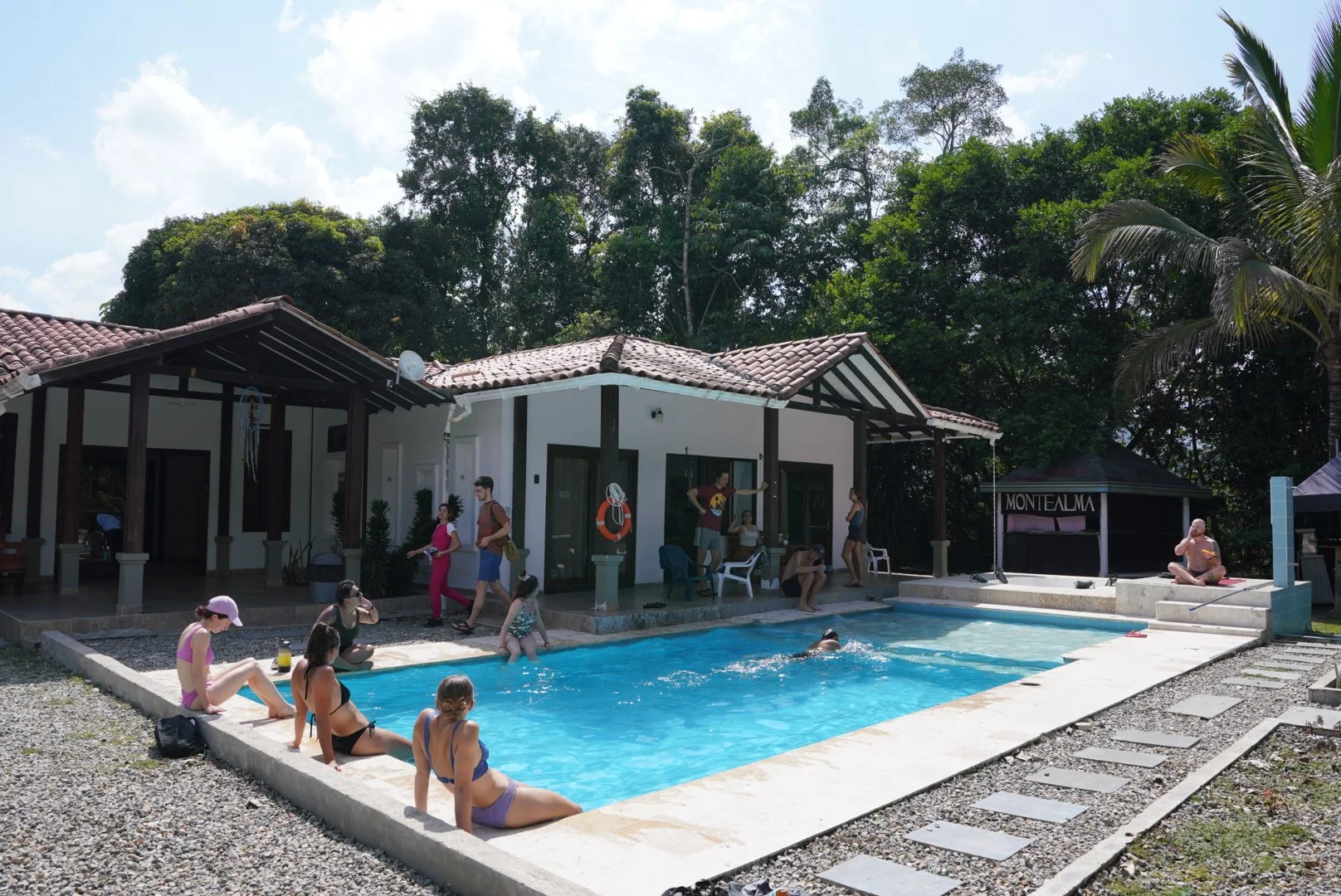
Natural adventure in San Carlos
Spanish Adventure home
Learning Spanish While Working Remotely
One of the biggest advantages of using San Carlos as a remote-work base is that Spanish can become part of your daily routine instead of another separate task on your calendar.
In a large international city, it is possible to spend weeks surrounded mainly by other foreigners.
In a small Colombian town, that is much harder to do.
At Spanish Adventure, students combine structured Spanish learning with conversations, local life and activities outside the classroom.
For a remote worker, that can create a very natural rhythm:
work + Spanish + local interaction + nature
instead of:
work + laptop + expat bubble
You do not need to arrive speaking perfect Spanish.
The point is to create opportunities to use the Spanish you already know and gradually become more comfortable communicating in real situations.
What Is the Cost of Living in San Carlos?
One of San Carlos’ biggest advantages for remote workers is cost.
Medellín has become significantly more expensive in recent years, especially in popular international neighborhoods such as El Poblado, where accommodation, restaurants and everyday expenses can add up quickly.
San Carlos is generally much more affordable, particularly for accommodation, local food and day-to-day life.
The trade-off is that you also have fewer options.
You will not find the same number of international restaurants, coworking spaces, nightlife venues or imported products that you would in Medellín. Life is simpler, more local and less consumption-oriented.
For many digital nomads, that is actually part of the appeal.
If your priorities are a comfortable place to stay, good internet, local food, nature and a quieter routine, San Carlos can offer much better value for money than staying in one of Medellín’s most popular expat areas.
Your final budget will still depend on your accommodation, food, transport and activities, but in general:
San Carlos = lower daily costs + fewer international options
Medellín = higher costs + more convenience, nightlife and choice
For longer stays, weekly or monthly accommodation rates can make San Carlos even more attractive for remote workers planning to stay several weeks or months.
How Do You Get to San Carlos From Medellín?
San Carlos is approximately 108 km from Medellín via Granada.
Travel time varies depending on traffic, road conditions, route and type of transport.
Travelers normally reach San Carlos by road, using public transportation or private transport.
Because the route passes through the mountains of eastern Antioquia, it is better to think of the journey in terms of the experience and road conditions rather than expecting one guaranteed travel time.
If you are arriving directly from an international flight, planning transportation in advance can make the journey much easier.
Is San Carlos Safe for Digital Nomads?
No destination should be described as completely safe.
Conditions can change, and travelers have different levels of experience and risk tolerance.
As elsewhere in Colombia, use normal travel precautions:
ask local hosts about current conditions;
plan transportation;
avoid displaying expensive equipment unnecessarily;
understand where you are going before heading into rural areas;
use appropriate guides or operators for outdoor activities;
check current travel information before your trip.
One advantage of staying in a smaller community is having local people you can ask for practical advice.
That is usually much more useful than treating “Is it safe?” as a simple yes-or-no question.
Can Digital Nomads Stay Long Term in Colombia?
Colombia currently offers a Visitor Visa for Digital Nomads for certain remote workers, independent professionals and digital entrepreneurs who work digitally for foreign companies or clients.
The visa can allow longer stays for eligible applicants, but immigration rules depend on nationality, work circumstances and current regulations.
Some travelers may also enter Colombia without first applying for a digital nomad visa, depending on nationality and permitted length of stay.
Because visa rules can change, always verify current requirements directly with Colombia’s Ministry of Foreign Affairs before planning a long stay.

Canyoning in San Carlos
Who Might Prefer Medellín?
Medellín will probably be a better base if you need:
many coworking spaces;
frequent professional networking;
major nightlife;
a very large international community;
highly specialized services nearby;
constant urban entertainment;
the convenience of a major city.
Who Should Choose San Carlos?
San Carlos can be a particularly good fit if you:
work remotely and value quiet periods for concentration;
prefer nature to nightlife;
want to practice Spanish in everyday life;
enjoy slower travel;
want a different experience from Colombia’s major tourist cities;
do not need a large international community around you;
enjoy outdoor activities;
want your time in Colombia to feel connected to local life.
San Carlos is not “better than Medellín.”
They offer completely different experiences.
For some digital nomads, Medellín is exactly what they need.
For others, San Carlos offers the part of Colombia they were actually hoping to experience.
Final Verdict: Is San Carlos Worth It for Remote Workers?
Yes — for the right kind of remote worker.
San Carlos makes the most sense if you want your time in Colombia to involve more than moving your laptop from one coworking café to another.
It offers the possibility of combining:
remote work + Spanish + nature + local life
in a place that feels very different from Colombia’s main digital nomad hubs.
The internet is generally good enough for normal remote work, daily life is slower, and nature is always close.
The trade-off is that you will find fewer coworking spaces, less nightlife and fewer international services than in Medellín.
For many travelers, that is not a disadvantage.
It is precisely the reason to come.
Planning to Spend Time in Colombia?
If Colombia is part of your remote-work journey, start practicing the Spanish you are likely to need from the moment you arrive.
Survive Your First Day in Colombia is a free story-based experience where you can practice greetings, checking in, ordering food, asking questions and understanding answers through situations travelers may face during their first 24 hours.
Frequently Asked Questions About Remote Work in San Carlos, Colombia
-
Yes, especially for remote workers who prefer a quieter lifestyle, nature, everyday Spanish and lower living costs over large coworking spaces and nightlife. San Carlos is better suited to people who want to work during the day and experience local life, rivers, waterfalls and outdoor activities in their free time.
-
Yes. Remote work in Colombia is not limited to cities such as Medellín or Bogotá. Smaller towns can work very well if they have a reliable internet connection, suitable accommodation and the services you personally need. San Carlos combines good internet with a small-town environment and easy access to nature.
-
Yes. Internet in San Carlos is generally good enough for video calls, online meetings, cloud-based work, streaming and other common remote-work tasks. Occasional interruptions can happen, particularly during strong storms, but they are relatively uncommon. Keeping mobile data as a backup is still useful for work that requires uninterrupted connectivity.
-
Yes. San Carlos offers a very different experience from Medellín. There are fewer coworking spaces, international restaurants and nightlife options, but also less traffic, less noise and a slower pace of life. It can be a good alternative for remote workers who want to concentrate, spend more time outdoors and experience a smaller Colombian community.
-
Very much so. San Carlos makes more sense as a place to stay for several weeks than as a destination you rush through in a day or two. Staying longer gives you time to develop a routine, explore the surrounding nature gradually, meet local people and use Spanish in everyday situations while continuing to work remotely.
-
A stay of at least one or two weeks gives you enough time to settle into a work routine and explore some of the area. Remote workers interested in Spanish immersion or slower travel may prefer several weeks or even a few months, depending on their visa status, accommodation and travel plans.
-
Not necessarily. Daily life in town can be managed without your own vehicle, and public or private transportation is available for getting around the region. However, some waterfalls, rural areas and activities are easier to reach with organized transportation, a local guide or a vehicle.
-
Generally, yes. San Carlos is significantly more affordable than many of Medellín’s most popular international neighborhoods, particularly areas such as El Poblado. Accommodation, local food and everyday expenses tend to cost less, although San Carlos also has fewer international restaurants, coworking spaces and nightlife options.
-
Yes. This is one of the main advantages of staying in a smaller Colombian town. Spanish naturally becomes part of daily life when ordering food, shopping, arranging transportation and speaking with local people. Remote workers can also combine their schedule with structured Spanish classes or conversation practice.
-
San Carlos is surrounded by rivers, waterfalls, natural swimming spots, mountains and rural landscapes. After finishing work, you can swim, hike, explore waterfalls, visit the town, practice Spanish, relax in nature or join outdoor activities with local operators. This easy access to nature is one of the main differences between working remotely in San Carlos and staying in a large city.
