
How to Practice Spanish in Real Life While Traveling in Colombia.
Learning Spanish in a classroom is one thing. Using it when someone speaks faster than expected, asks you a question at a café, or starts a conversation in the street is another.
The good news is that you don’t need perfect Spanish to start practicing in real life. If you’re traveling in Colombia, everyday moments—ordering coffee, asking for directions, talking to a shopkeeper, joining a local activity, or meeting new people—can become opportunities to build confidence.
In this guide, you’ll learn practical ways to practice Spanish in real-life situations in Colombia, even if you’re still a beginner, and how to turn everyday interactions into part of your learning.
1. Practice Spanish in Local Markets
One of the best ways to improve your Spanish is to travel like a local in Colombia and head to traditional markets.
Here, you can:
Ask about prices in Spanish
Learn the names of Colombian fruits and dishes
Engage in small talk with vendors
In cities like Medellín or small towns like San Carlos, these markets are more than shopping spots—they’re community hubs where your Spanish skills will grow quickly.

2. Join Cultural Tours and Workshops
Cultural tourism in Colombia is a goldmine for language learning. Consider:
Taking a coffee farm tour and asking the guide questions in Spanish
Joining a Colombian cooking class to learn both recipes and culinary vocabulary
Participating in local dance classes like salsa, cumbia, or vallenato
These activities provide authentic cultural immersion in Colombia, allowing you to connect with locals while practicing Spanish.
Real conversations also expose you to expressions you may never see in a textbook. If you want to recognize more of the Spanish Colombians actually use, explore these 10 Colombian expressions every traveler should know.
Traveling to Colombia soon? Start with the Spanish you’ll actually need on your first day.
3. Stay Somewhere Where Spanish Is Part of Daily Life
Where you stay can make a big difference in how much Spanish you actually use.
Instead of spending your whole trip surrounded by other travelers speaking English, choose places where everyday life gives you natural opportunities to interact in Spanish.
In a small Colombian town like San Carlos, that can mean ordering breakfast, chatting with local staff, buying something at a neighborhood shop, asking questions during an activity, or simply greeting the same people you see every day.
These small interactions may not feel like “studying,” but they help you become more comfortable listening, responding, and staying in Spanish without translating everything first.
If you work remotely, you can also combine work, Spanish practice, and local life without giving up reliable accommodation and a comfortable place to focus.
4. Use Spanish During Your Adventures
Colombia offers endless opportunities for adventure:
Ask for directions in Spanish while hiking
Chat with boat operators during a river tour
Share stories with fellow travelers around a campfire
These moments create benefits of learning Spanish while traveling, making your language skills more natural and adaptable.
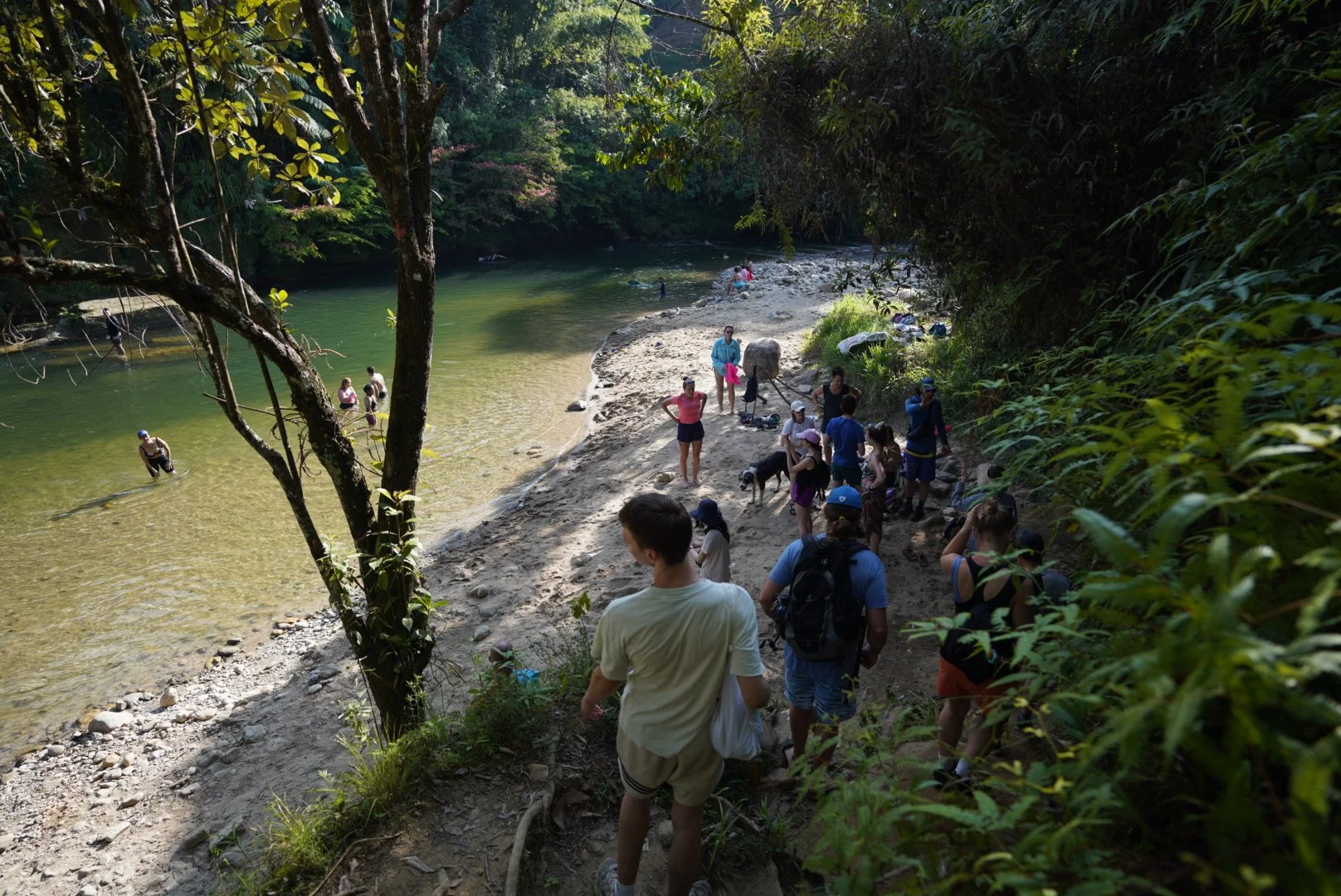
Natural adventures in San Carlos with locals
5. Combine Real-Life Practice with Structured Learning
Practicing Spanish in cafés, shops, tours, and everyday conversations is one of the best ways to build confidence. But real-life practice becomes much more effective when you also have a place to understand what happened, correct mistakes, and learn the language you actually need next.
A structured Spanish program can help you notice patterns, improve your grammar, get feedback, and prepare for situations you are likely to experience outside the classroom.
At Spanish Adventure, the idea is to connect both sides of learning: structured Spanish classes and real-life use. You might study a useful structure in class and then hear it again while talking to someone in town, joining an activity, ordering food, or working on a project.
That is when Spanish starts to feel less like something you are studying and more like something you can actually use.
If you want to see how this approach works, you can explore our Spanish classes or compare our Spanish immersion programs in Colombia.

Learn Spanish in Colombia through cultural immersion activities at Spanish Adventure
Extra Tips for Practicing Spanish Daily
Switch your phone and apps to Spanish
Keep a small notebook for new words you learn each day
Challenge yourself to only speak Spanish during certain hours
Listen to Colombian music and try singing along with the lyrics
Watch local TV shows or YouTube videos with Spanish subtitles
Conclusion: Spanish Gets Easier When You Start Using It
You do not need to wait until your Spanish is perfect before you start speaking.
The conversations that feel a little uncomfortable at first—ordering coffee, asking a question, misunderstanding someone, trying again—are often the moments when the language begins to become real.
The goal is not to understand every word. It is to become comfortable staying in Spanish, using what you know, and learning from what happens next.
And when real-life practice is combined with structured learning, feedback, and daily opportunities to interact with local people, progress can happen much faster.
That is exactly what immersion is designed to do: take Spanish out of the textbook and make it part of your everyday life.
Ready to Practice Spanish in Real Life?
Spend your days learning Spanish, exploring Colombia, and using the language in real conversations—not just exercises.
Frequently Asked Questions About Practicing Spanish in Real Life in Colombia
-
Use Spanish during ordinary moments: order coffee, ask for directions, shop at local stores, talk to guides, greet people you see regularly, and ask simple follow-up questions. These short interactions help you become more comfortable speaking without needing perfect Spanish.
-
No. Even beginners can start with greetings, simple questions, numbers, directions, and useful travel phrases. The goal is not to understand everything—it is to communicate what you need, keep the interaction going, and learn from each conversation.
-
Cafés, local markets, small shops, restaurants, public transportation, tours, and community activities are all good places to practice. Smaller towns can be especially useful because you may see the same people regularly and have more opportunities for repeated conversations.
-
Yes. Markets give you natural reasons to ask about prices, quantities, fruits, food, and local products. These predictable interactions are especially useful for beginners because you can practice the same language several times with different people.
-
Tours, cooking activities, dance classes, hikes, and other local experiences give vocabulary a real context. Instead of memorizing isolated words, you hear and use Spanish while doing something, asking questions, and interacting with people.
-
You do not have to switch immediately to English. Try phrases such as “Perdón, no entendí,” “¿Otra vez?” or “Más despacio, por favor.” Learning how to repair a conversation is one of the most useful skills for speaking Spanish in real life.
-
Set small daily goals: order something in Spanish, ask one question, write down new expressions, listen to local Spanish, or spend part of the day avoiding English when possible. Consistent short interactions are usually more useful than waiting for the perfect conversation.
-
Real-life interaction is extremely valuable for confidence, listening, and spontaneous communication, but structured learning can help you understand grammar, correct recurring mistakes, and make faster progress. Combining both usually gives you a stronger learning experience.
-
Yes. Remote work and Spanish immersion can work well together if you stay somewhere that gives you regular contact with Spanish outside your working hours. A smaller Colombian community can make it easier to combine focused work with everyday conversations and local activities.
-
Colombia offers many different environments for using Spanish—from cities and cafés to small towns, markets, cultural activities, and outdoor adventures. For travelers who actively look for interaction, everyday life can provide frequent opportunities to listen, speak, make mistakes, and become more confident.
