
Spanish Greetings in Colombia: What to Say in Real Conversations
Knowing how to say hello is one of the easiest ways to start using Spanish in Colombia. Beyond hola, you’ll hear greetings like buenas, ¿qué más?, ¿todo bien? and ¿cómo amaneciste? depending on the situation and the people you meet.
In this guide, you’ll learn common Spanish greetings, Colombian alternatives, when to use formal or informal language, and how these phrases sound inside real conversations.
1. Basic Spanish Greetings (Saludos Básicos)
These are the first greetings every Spanish learner should master. You’ll hear them daily across Colombia — in cafés, hostels, or the streets.
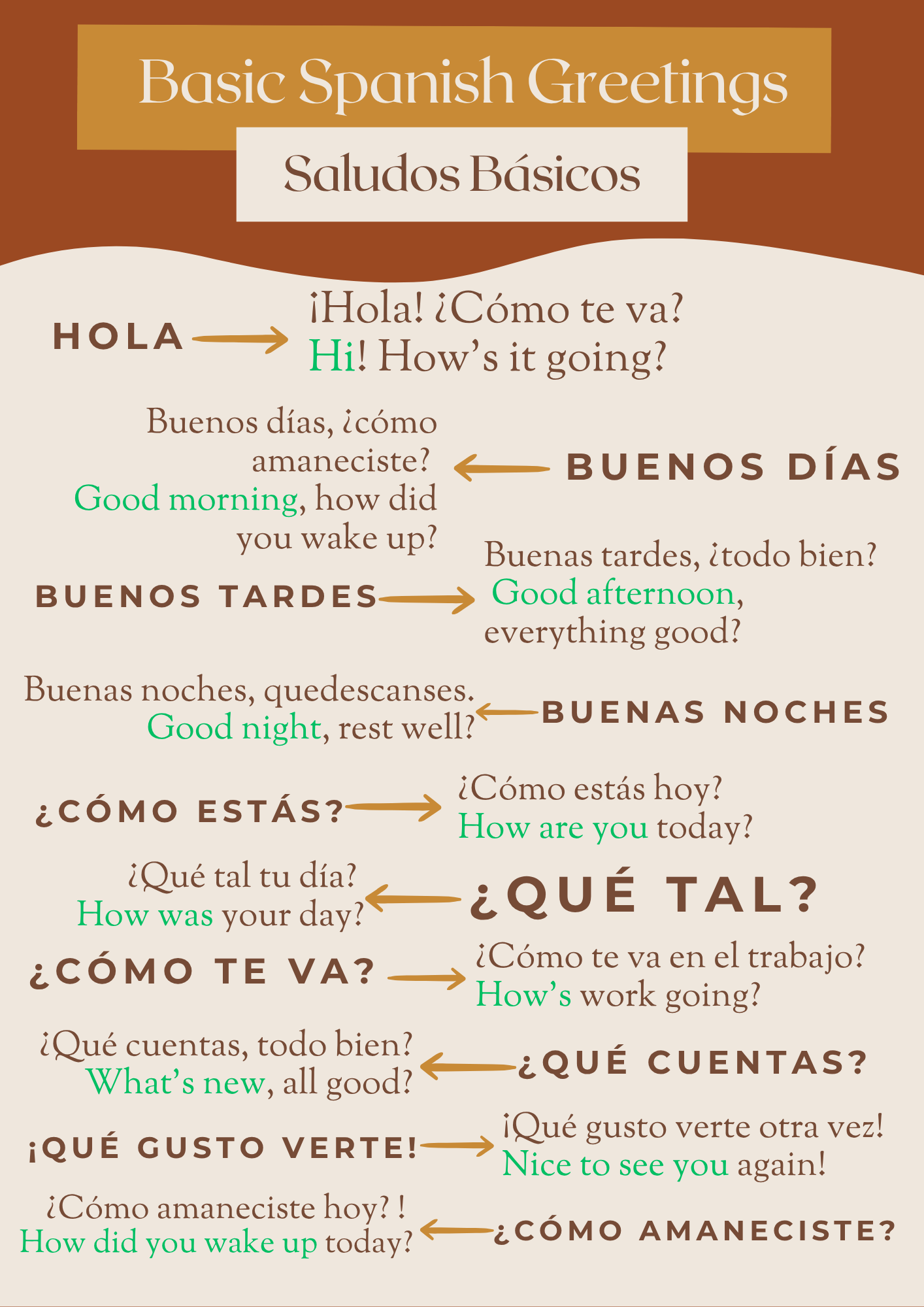
| Spanish | English | When to use it |
|---|---|---|
| Hola | Hello | Any time of day |
| Buenos días | Good morning | Morning |
| Buenas tardes | Good afternoon | Afternoon and early evening |
| Buenas noches | Good evening / Good night | Evening or night |
| ¿Cómo estás? | How are you? | Informal conversation |
| ¿Qué tal? | How’s it going? | Casual and widely understood |
2. Informal Greetings (Saludos Informales)
Perfect for travelers, backpackers, and friends. These expressions reflect the friendly, spontaneous Colombian vibe.

| Spanish | English | Context |
|---|---|---|
| Buenas | Hello / Hi | Common when entering a shop, café, restaurant, or reception |
| ¿Qué más? | What’s up? / How’s it going? | Very common informal greeting in Colombia |
| ¿Todo bien? | Everything good? / How are things? | Casual and friendly |
| Parce / parcero | Buddy / mate | Very informal, especially associated with Antioquia |
| ¿Cómo amaneciste? | How are you this morning? | Common in familiar conversations |
| ¡Qué bueno verte! | Great to see you! | Friendly and informal |
Colombia tip: You’ll often hear Buenas used on its own when someone enters a shop, café, restaurant, or reception. It works as a simple, polite greeting without needing to choose between buenos días or buenas tardes.
Want to go beyond greetings? Learn more everyday Colombian Spanish in our guide to 10 Colombian expressions every traveler should know, including parce, de una, and pilas.
At Spanish Adventure, we teach Spanish the same way travelers need to use it: learn the language, practice it in conversation, apply it in real situations, and keep using it through everyday life
Ready to take these greetings into a real conversation?
You know how to say hello, ask how someone is doing, and introduce yourself. Now practice those phrases as part of an actual arrival in Colombia. Survive Your First Day in Colombia is a free story-based experience that helps you use practical Spanish during your first 24 hours.
3. Formal Greetings (Saludos Formales)
Essential for remote professionals, students, or travelers who want to show respect in Colombia’s polite culture.

| Spanish | English | Context |
|---|---|---|
| Buenos días | Good morning | Polite and appropriate in almost any situation |
| ¿Cómo está? | How are you? | Formal or respectful use with usted |
| Mucho gusto | Nice to meet you | When being introduced to someone |
| Con permiso | Excuse me / May I? | When passing someone or asking permission |
| Disculpe | Excuse me / Sorry | Polite way to get someone’s attention |
Language tip: Not every phrase in this section is technically a greeting. Expressions like con permiso and disculpe are useful politeness phrases that travelers will hear and use frequently in everyday interactions.
Tú or Usted in Colombia?
Usted is commonly used to show respect, especially with older people, strangers, or in more formal situations. But usage varies by region and relationship, and in some parts of Colombia usted can also sound perfectly warm and familiar.
As a traveler, you don’t need to overthink it. If you’re unsure, starting with usted is a polite choice.
4. Farewells (Despedidas)
Colombians often say goodbye with affection and positivity. These expressions will help you leave a good impression.

| Spanish | English | Context |
|---|---|---|
| Adiós | Goodbye | General farewell |
| Chao | Bye | Very common and informal |
| Nos vemos | See you | Casual farewell when you expect to meet again |
| Hasta luego | See you later | Neutral and widely used |
| Que te vaya bien | Take care / Hope it goes well | Friendly and informal |
| Que esté bien | Take care | Polite or more formal |
5. How to Practice Greetings While Traveling in Colombia 🌎
You don’t need a long conversation to start practicing. Try greeting people in small everyday situations:
Say Buenos días when entering a café in the morning.
Try Buenas when entering a small shop or restaurant.
Answer ¿Todo bien? with Sí, todo bien. ¿Y tú?
Use Mucho gusto when someone introduces you.
Say Que esté bien or Que te vaya bien when leaving.
Repeating these short interactions every day helps greetings become automatic instead of something you have to translate first.
Spanish Greetings in Real Colombian Conversations
Arriving at a hostel
— Buenos días.
— Buenos días, ¿todo bien?
— Sí, muy bien, gracias. ¿Y usted?
— Todo bien.Meeting someone your age
— Hola, ¿qué más?
— Todo bien. ¿Y tú?
— Bien, bien. Mucho gusto.
— Igualmente.
Saying goodbye
— Bueno, nos vemos mañana.
— De una. Que estés bien.
— Chao, cuídate.
🌟 Final Thoughts
Learning how to greet people in Spanish is more than just vocabulary — it’s about connection.
In Colombia, every “Hola” comes with a smile, every “¿Todo bien?” opens a door to conversation, and every “¡Qué chévere verte!” makes you feel like family.
So next time you travel, don’t just study Spanish — live it.
Experience the benefits of learning Spanish while traveling and discover a world of friendship, laughter, and culture waiting for you in Colombia.
Use Your Spanish From the Moment You Arrive
Greetings are often the first Spanish you’ll use in Colombia—but they’re only the beginning of the conversation. Survive Your First Day in Colombia puts useful phrases into a realistic arrival story, so you can practice what to say when you meet people, check in, order something, and start exploring.
-
The most useful greetings to know are Hola, Buenos días, Buenas tardes, Buenas noches, Buenas, ¿Cómo estás?, ¿Todo bien? and ¿Qué más?. These cover most everyday situations travelers encounter, from entering a café to meeting someone for the first time.
-
Common informal greetings include ¿Qué más?, ¿Todo bien?, ¿Qué tal? and simply Buenas. In Medellín and Antioquia, you may also hear parce or parcero between friends. The best choice depends on the situation and how familiar you are with the person.
-
In Colombia, ¿Qué más? is a common informal greeting meaning something like “What’s up?” or “How’s it going?” It is not usually meant literally. A simple reply such as Todo bien, Bien, ¿y tú?, or Muy bien works naturally.
-
Buenas is a short, convenient way to say hello. You will often hear it when someone enters a shop, café, restaurant, hotel, reception, or other everyday setting. It is useful because you do not have to choose between buenos días, buenas tardes, or buenas noches.
-
If you are unsure, usted is a polite choice, especially with older people, strangers, or in formal situations. However, usage varies across Colombia, and in some regions usted can also sound warm and familiar. Tú is common in more casual relationships.
-
Short answers are usually best. You can say Bien, gracias. ¿Y tú?, Todo bien, Muy bien, or Muy bien, ¿y usted? in a more formal conversation. Asking the question back is a natural way to keep the interaction friendly.
-
Use Buenos días in the morning, Buenas tardes from around midday through the afternoon, and Buenas noches in the evening or at night. Exact timing varies, so travelers do not need to worry about changing greetings at a precise hour.
-
The basic greetings are the same across Colombia, but the tone and informal expressions can vary. In smaller towns, greetings may feel more personal and frequent, while cities can be more varied. Regional expressions also differ, especially between places such as Medellín, Bogotá, Cali, and the Caribbean coast.
-
Common farewells include Chao, Nos vemos, Hasta luego, Que te vaya bien and Que esté bien. Chao and nos vemos are casual, while que esté bien is a polite option when speaking to someone with usted.
-
You can practice greetings in simple daily interactions: entering a café, checking into accommodation, ordering food, meeting a new person, or asking for help. You can also practice before your trip with Survive Your First Day in Colombia, a free story-based resource designed around realistic arrival situations.
